Updated April 2026 · 8-minute read · Covers Automatic & Manual Transmissions
Quick Answer: To check transmission fluid, warm up your car, locate the transmission dipstick (usually a red handle near the back of the engine), pull it out and wipe it clean, reinsert it fully, then pull again and read the level and color. The fluid should sit between the MIN and MAX marks and appear reddish-pink — not dark brown or burnt-smelling.
Table of Contents
- Why Transmission Fluid Matters
- When Should You Check It?
- What You’ll Need
- Step-by-Step: How to Check Automatic Transmission Fluid
- How to Check Manual Transmission Fluid
- Reading the Color: What Your Fluid Is Telling You
- Reading the Level: Low, Correct, or Overfilled
- Symptoms of Bad or Low Transmission Fluid
- How Often Should You Change It?
- Frequently Asked Questions
Why Transmission Fluid Matters
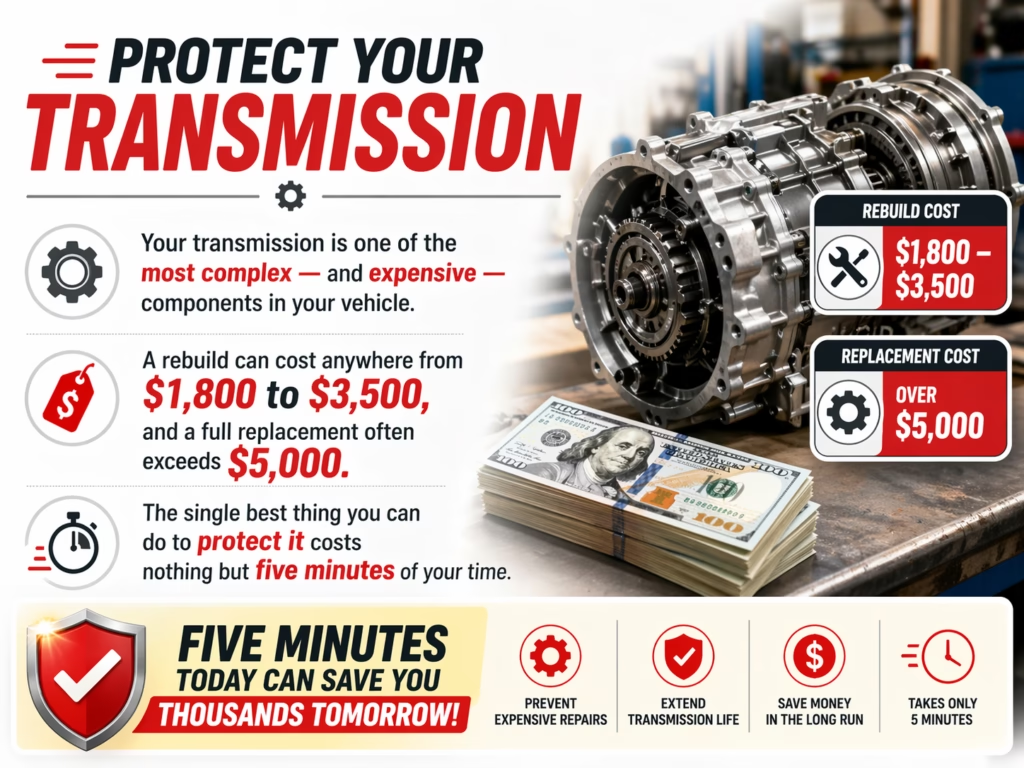
Your transmission is one of the most complex — and expensive — components in your vehicle. A rebuild can cost anywhere from $1,800 to $3,500, and a full replacement often exceeds $5,000. The single best thing you can do to protect it costs nothing but five minutes of your time.
Transmission fluid performs four critical jobs simultaneously. It lubricates the hundreds of moving parts inside the gearbox, cools the transmission by carrying heat to the cooler, cleans internal components by suspending contaminants, and provides the hydraulic pressure needed to engage gear clutches in automatic transmissions. When fluid degrades or drops low, every one of these functions suffers — often without any obvious symptoms until serious damage is already done.
When Should You Check It?
Most mechanics recommend checking your transmission fluid every 30,000 to 60,000 miles, or once a year — whichever comes first. However, certain situations call for an immediate inspection:
- You notice slipping gears or hesitation when shifting
- There’s a burning smell coming from the engine bay
- You see a reddish puddle underneath your parked car
- The transmission feels rough, jerky, or slow to respond
- You’ve recently towed a heavy load or driven in extreme heat
- Your dashboard shows a transmission warning light
What You’ll Need
Checking your transmission fluid requires almost no tools:
- A clean, lint-free rag or paper towel
- Your vehicle owner’s manual (to confirm dipstick location and fluid type)
- A flashlight (helpful in tight engine bays)
- Nitrile gloves (optional — transmission fluid is a mild skin irritant)
That’s it. No special equipment, no jack stands, no experience required.
Step-by-Step: How to Check Automatic Transmission Fluid
Follow these steps in order. Skipping the warm-up step in particular will give you a false reading.
Step 1 — Warm Up the Engine Drive your vehicle for at least 5–10 minutes until it reaches normal operating temperature. Transmission fluid expands when hot, so checking it cold will show an artificially low level. Park on a flat, level surface — an uneven surface also skews the reading.
Step 2 — Leave the Engine Running For most automatic transmissions, the engine should remain running in Park (P) during the check. This allows fluid to circulate and gives you an accurate operating level. Always verify this in your owner’s manual — some European vehicles (BMW, VW) require the engine to be off.
Step 3 — Locate the Transmission Dipstick Open the hood and look for a dipstick handle — typically red, pink, or yellow — located toward the rear of the engine bay on rear-wheel-drive cars, or to the side on front-wheel-drive vehicles. It’s usually labeled “TRANS” or “ATF.” Note: many modern vehicles (2015 onward) have a sealed transmission with no dipstick — check your owner’s manual.
Step 4 — Pull, Wipe, and Reinsert Pull the dipstick out completely and wipe it clean from tip to handle. Reinsert it fully until it seats. This step is essential — the first reading is always unreliable because fluid splashes up the dipstick tube while the car is driven.
Step 5 — Pull Again and Read Pull the dipstick out a second time and hold it horizontally. Check two things: where the fluid sits relative to the MIN and MAX marks, and what color the fluid is. Use the HOT markings since the engine is warmed up.
Step 6 — Reinsert and Close the Hood Push the dipstick back in firmly until it seats. Close the hood. If the level or condition needs attention, address it before driving further.
Important: Never top up with the wrong fluid type. Using an incorrect ATF specification can damage seals and clutch packs within hours. Always match the exact type listed in your owner’s manual — such as Dexron VI, Mercon V, Toyota WS, or Honda ATF-DW1.
How to Check Manual Transmission Fluid
Manual transmissions use gear oil (typically 75W-90) rather than ATF and have no dipstick. Here’s how to check them:
- Turn off the engine and allow it to cool for about 5 minutes.
- Locate the fill plug on the side of the transmission case — it’s a large bolt (usually 17mm–24mm) positioned roughly halfway up the housing.
- Clean around the plug, then remove it with a wrench or ratchet.
- Insert your finger into the hole. The fluid should be at or just below the bottom edge of the fill port.
- If it’s significantly lower, fluid needs to be added using a hand pump.
- Replace the fill plug and torque it to spec — typically 25–35 ft-lbs. Do not overtighten.
Reading the Color: What Your Fluid Is Telling You
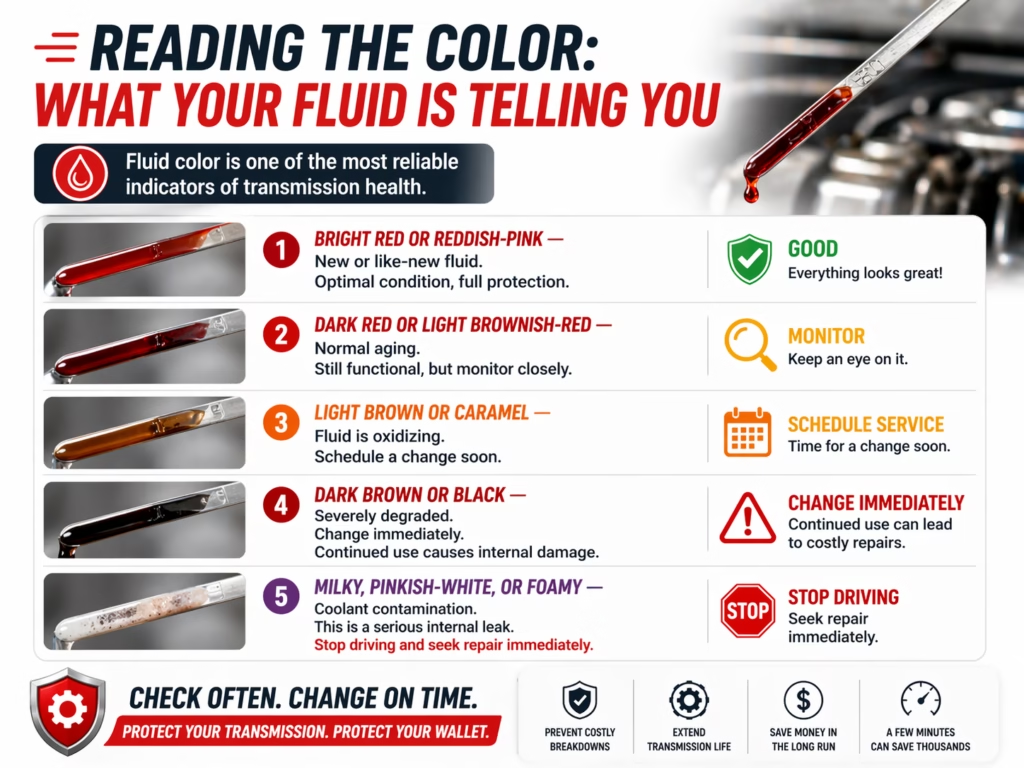
Fluid color is one of the most reliable indicators of transmission health.
- Bright red or reddish-pink — New or like-new fluid. Optimal condition, full protection.
- Dark red or light brownish-red — Normal aging. Still functional, but monitor closely.
- Light brown or caramel — Fluid is oxidizing. Schedule a change soon.
- Dark brown or black — Severely degraded. Change immediately. Continued use causes internal damage.
- Milky, pinkish-white, or foamy — Coolant contamination. This is a serious internal leak. Stop driving and seek repair immediately.
In addition to color, always smell the fluid. Fresh transmission fluid has a slightly sweet petroleum scent. A sharp, acrid, burnt smell — similar to burnt toast — means the fluid has overheated and broken down. Even if the color looks acceptable, a burnt smell alone is reason enough for an immediate fluid change.
Reading the Level: Low, Correct, or Overfilled
| Reading | What It Means | What to Do |
|---|---|---|
| Between MIN and MAX (hot) | Level is correct | Nothing required — recheck at next service |
| Below MIN mark | Low fluid | Top up with correct ATF; check for leaks |
| Above MAX mark | Overfilled | Have excess removed — causes foaming and seal damage |
| No reading at all | Critical — do not drive | Tow to a service center. Major leak likely. |
Symptoms of Bad or Low Transmission Fluid
Even between scheduled checks, your car will often warn you. Watch for these signs:
- Gear slipping — The engine revs but the car doesn’t accelerate proportionally
- Delayed engagement — A pause between shifting into Drive or Reverse and actual movement
- Rough or jerky shifts — The transmission clunks or shudders between gears
- Overheating — Transmission temperature warning light appears on the dashboard
- Unusual noises — Whining, humming, or grinding, especially under load
- Fluid puddle — Reddish or pinkish fluid pooling under the center or front of the vehicle
How Often Should You Change Transmission Fluid?
The “lifetime fluid” claim found in many modern owner’s manuals is largely a marketing position, not a long-term protection strategy. Here are practical change intervals:
| Transmission Type | Normal Driving | Severe Driving* |
|---|---|---|
| Automatic (conventional) | 30,000–60,000 miles | 15,000–30,000 miles |
| Automatic (modern sealed) | 60,000–100,000 miles | 40,000–60,000 miles |
| CVT | 30,000–50,000 miles | 20,000–30,000 miles |
| Manual (gear oil) | 30,000–50,000 miles | 15,000–25,000 miles |
| DCT (Dual Clutch) | 40,000–60,000 miles | 25,000–40,000 miles |
Severe driving includes towing, mountain driving, frequent stop-and-go traffic, extreme temperatures, or performance driving.
Frequently Asked Questions
Can I check transmission fluid when the car is cold? You can use the cold markings for a rough check, but it isn’t reliable. Transmission fluid expands significantly when hot, so a cold reading will appear low even when the level is correct. Always warm the car up for at least 5–10 minutes first.
My car doesn’t have a transmission dipstick — what do I do? Many vehicles made after 2010 — including BMW, Mercedes, Ford, and several Honda models — have sealed transmissions. These require a workshop check using a fill plug procedure on a lift, often at a specific fluid temperature. Most specialists recommend checking every 60,000–80,000 miles regardless of manufacturer claims.
What happens if I overfill the transmission fluid? Overfilling is just as damaging as running it low. Excess fluid foams under the churning action of rotating components. Foamy fluid can’t lubricate or cool properly, and the added pressure forces fluid past seals and gaskets, creating leaks. Have any excess removed before driving.
How long does transmission fluid actually last? Conventional ATF lasts roughly 30,000–60,000 miles under ideal conditions. Synthetic ATF, used in most modern vehicles, can last 60,000–100,000 miles. Severe driving conditions shorten these intervals considerably. Fluid color and smell are more reliable guides than mileage alone.
Can low transmission fluid cause the car not to move? Yes. In automatic transmissions, fluid provides the hydraulic pressure needed to engage gear clutches. Critically low fluid means insufficient pressure, which can cause slipping, failure to engage, or a situation where the engine revs freely but the car doesn’t move. At this point, internal damage is often already occurring.
Is it safe to mix different brands of transmission fluid? Mixing brands of the same specification — for example, two different brands of Dexron VI — is generally acceptable for a short-term top-up. Mixing different specifications, such as Dexron III with Mercon V, is not recommended and can cause seal and clutch pack incompatibility. Always use the spec listed in your owner’s manual.
Disclaimer: This article is for informational purposes only. Always consult your vehicle owner’s manual and a qualified technician for advice specific to your vehicle.


