- The Basic Answer
- What Happens When Your Engine Is Running?
- How Many Volts Is a Car Battery When It's Getting Weak?
- Signs Your Battery Voltage Is Off
- What About Different Types of Vehicles?
- Taking Care of Your Battery
- The Bottom Line
- Check Your Car Battery Health
- How To Check Car Battery Voltage With A Multi-Meter
If you’ve ever wondered how many volts is a car battery, you’re not alone. It’s one of those questions that seems simple but can get a bit confusing when you start looking into it. Most people will tell you it’s a 12-volt battery, and they’re right, but there’s more to the story than just that number.
The Basic Answer
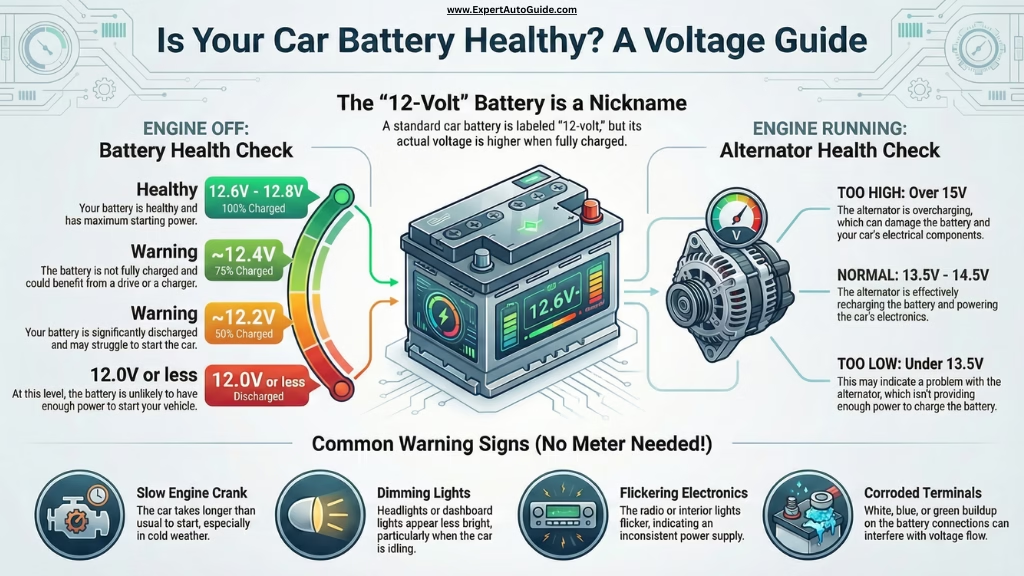
A standard car battery is called a 12-volt battery. That’s what you’ll see on the label, and that’s what people mean when they talk about car batteries. But here’s the thing: a healthy, fully charged 12-volt car battery actually measures around 12.6 to 12.8 volts when the engine is off. Some newer batteries might even read closer to 13 volts when they’re brand new and fully charged.
So why do we call it a 12-volt battery if it’s actually higher than that? It’s just the standard way these batteries are labeled based on their nominal voltage, which is the average voltage they operate at.
What Happens When Your Engine Is Running?
Once you start your car, things change. When the engine is running and the alternator is doing its job, you’ll see the voltage jump up to somewhere between 13.5 and 14.5 volts. This is completely normal and actually necessary. The alternator needs to put out a higher voltage than the battery to recharge it and power all your car’s electrical systems at the same time.
If you check your battery with the engine running and it’s not reaching at least 13.5 volts, that might mean your alternator isn’t working right. On the other hand, if it’s pushing out more than 15 volts, that’s also a problem because it could damage your battery and other electrical parts.
How Many Volts Is a Car Battery When It’s Getting Weak?
This is where knowing your voltage really helps. If your battery is measuring around 12.4 volts or lower when the car is off, it’s not fully charged. At 12.2 volts, it’s about 50% charged. Once it drops to around 12 volts or below, you’re in trouble and the battery probably won’t have enough juice to start your car.
A lot of people don’t realize their battery is dying until it’s too late. If you’ve got a simple voltage meter (you can grab one for pretty cheap), checking your battery every few months can save you from getting stranded.
Signs Your Battery Voltage Is Off
You don’t always need a meter to know something’s wrong. If your car is slow to start, especially on cold mornings, that’s a sign the voltage is dropping. Dim headlights when the engine is idling can also mean your battery or alternator isn’t keeping up.
Sometimes you’ll notice your radio or dashboard lights flickering. These are all hints that the voltage in your electrical system isn’t where it should be.
What About Different Types of Vehicles?
Most regular cars and trucks use 12-volt batteries, but not everything does. A lot of big trucks, buses, and heavy equipment run on 24-volt systems. They usually do this by connecting two 12-volt batteries together. Some older cars and motorcycles might use 6-volt systems, though those are pretty rare these days.
Hybrids and electric cars are a whole different story. They have high-voltage battery packs for the electric motors (we’re talking hundreds of volts), but they also have a regular 12-volt battery for the normal car stuff like lights and radio.
Taking Care of Your Battery
Keeping your battery in good shape means checking it now and then. If you’re not driving your car much, the battery can lose its charge over time. A trickle charger can help with that. Also, make sure the connections on top of the battery are clean and tight. Corrosion on those terminals can mess with the voltage and keep your car from starting even if the battery is fine.
Extreme temperatures are hard on batteries too. Really hot or really cold weather can affect how well they hold a charge.
The Bottom Line
So, how many volts is a car battery? It’s called a 12-volt battery, but a healthy one should read between 12.6 and 12.8 volts when fully charged and not running. When your car is running, expect to see 13.5 to 14.5 volts. Anything way outside those ranges means you should probably get it checked out before you end up with a dead battery at the worst possible time.
Understanding these numbers can help you catch problems early and keep your car running smooth. It’s one of those simple things that can save you a lot of headaches down the road.
Check Your Car Battery Health
Battery Voltage Check
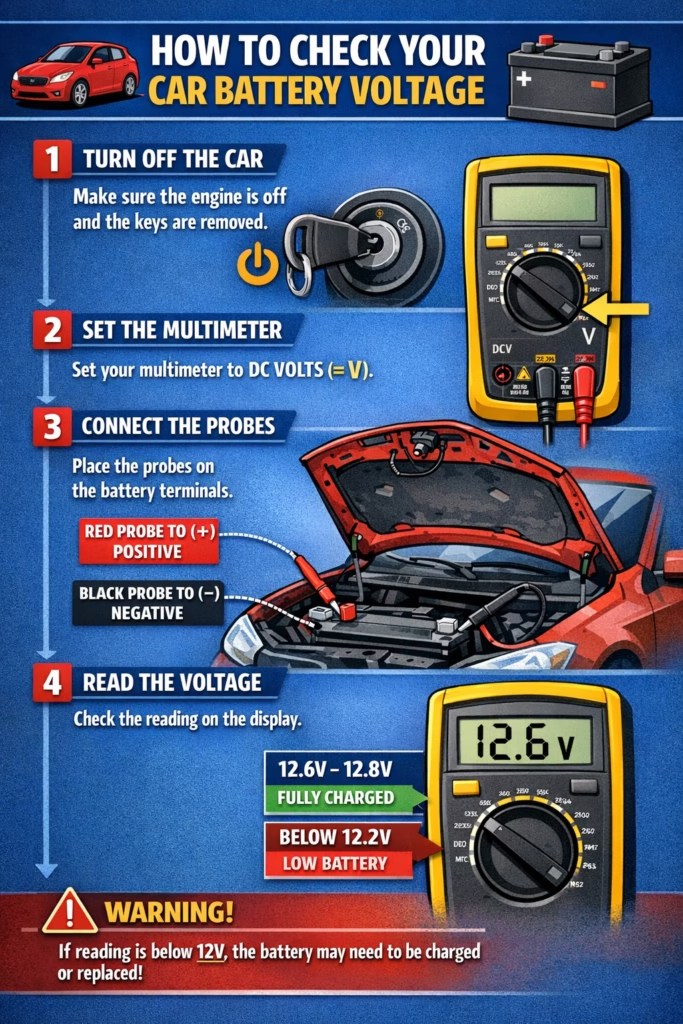
How To Check Car Battery Voltage With A Multi-Meter


One thought on “How Many Volts Is a Car Battery?”